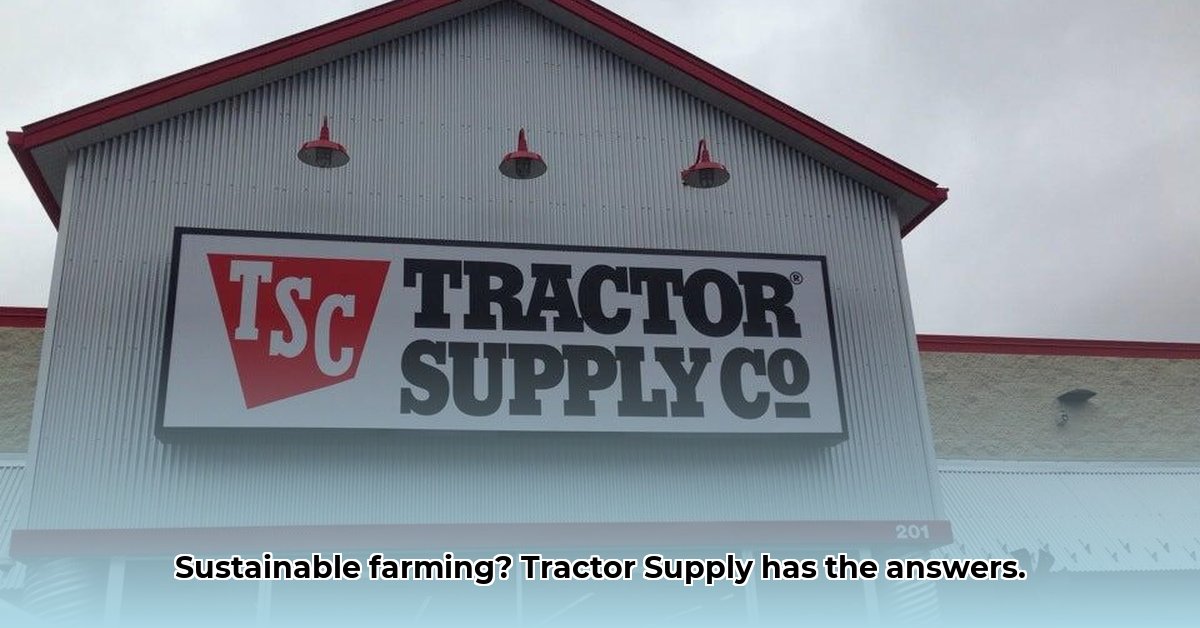
Tractor Supply Company (TSC) in Beaver Dam, Kentucky, plays a multifaceted role in the local agricultural landscape, supporting both conventional and sustainable farming practices. For more information on the Beaver Dam store, visit the TSC Beaver Dam page. This article analyzes TSC Beaver Dam's contribution to sustainable agriculture, examining its product offerings, highlighting the need for greater transparency, and proposing actionable steps for various stakeholders.
TSC Beaver Dam's Product Offerings: A Blend of Conventional and Sustainable
TSC Beaver Dam offers a broad range of agricultural supplies, encompassing both conventional and sustainable options. Alongside traditional fertilizers, animal feed, and equipment, the store stocks organic seeds, water-efficient irrigation systems, and natural pest control products. This accessibility benefits both conventional and eco-conscious farmers, providing a one-stop shop for various needs. However, a critical examination of the complete supply chain's environmental impact is necessary for a comprehensive assessment of the store's contribution to sustainability.
Analyzing Sustainable Practices: Unveiling the Nuances
While the availability of sustainable products at TSC Beaver Dam is a positive step, a full understanding of its impact requires transparency regarding the environmental footprint of the products' entire lifecycle. Questions remain concerning the manufacturing processes for fertilizers and pesticides, packaging waste reduction strategies, and the overall sustainability of the store's supply chains. This lack of readily available information limits a complete evaluation of the store's role in fostering sustainable agriculture.
- Key Insight 1: The accessibility of sustainable products at TSC Beaver Dam is beneficial, but crucial information about the entire supply chain's environmental impact is lacking.
- Key Insight 2: A holistic assessment requires transparency regarding manufacturing processes, packaging, and sourcing practices.
- Key Insight 3: Consumer demand and advocacy can drive improvements in the availability and transparency of sustainable products.
Actionable Recommendations for a Greener Future
To promote sustainable farming practices in the Beaver Dam area, collaborative efforts from various stakeholders are essential.
1. Tractor Supply Beaver Dam:
- Short-Term: Conduct a sales analysis of sustainable product lines and gauge consumer interest through brief surveys to inform future stock decisions.
- Long-Term: Partner with local sustainable agriculture organizations to offer educational resources and workshops. Implement a comprehensive sustainability program encompassing waste reduction and ethical sourcing, communicating these initiatives transparently to the community.
2. Local Farmers:
- Short-Term: Explore water-efficient irrigation and organic farming techniques, utilizing resources available at TSC Beaver Dam.
- Long-Term: Gradually adopt sustainable practices, leveraging TSC's resources and support for a smooth transition.
3. Consumers:
- Short-Term: Make conscious purchasing decisions, prioritizing sustainable alternatives where possible.
- Long-Term: Advocate for a greater selection of sustainable products at TSC and encourage greater transparency regarding environmental practices.
4. Tractor Supply Corporate:
- Short-Term: Utilize the Beaver Dam store as a pilot program to gather data on consumer demand for sustainable products and refine future strategies.
- Long-Term: Invest in research and development of environmentally conscious products and publish comprehensive, publicly accessible sustainability reports that detail their environmental impact and goals, thereby enhancing trust and accountability.
Risk Assessment and Mitigation Strategies
Transitioning to sustainable farming involves inherent risks. The following table outlines some challenges and potential mitigation strategies.
| Technology/Practice | Risk (Low/Medium/High) | Mitigation Strategy |
|---|---|---|
| Conventional Farming Inputs | Medium | Promote safer, less harmful alternatives; emphasize responsible application. |
| Livestock Management | Medium | Encourage methods such as rotational grazing for reduced environmental impact. |
| Water Management | Medium | Promote and provide access to water-efficient irrigation systems. |
| Supply Chain Sustainability | High | Implement transparent and ethical sourcing strategies; establish strong partnerships with responsible suppliers. |
Conclusion: A Path Towards Sustainable Agriculture
TSC Beaver Dam's role in sustainable agriculture is multifaceted. While the store offers access to sustainable options, greater transparency and collaborative efforts are essential. Further research, increased consumer advocacy, and corporate commitment to sustainability are crucial for fostering a truly environmentally responsible agricultural system in Beaver Dam and beyond. The future success hinges on open communication, data-driven decision-making, and shared responsibility amongst all stakeholders.